Teaching Library

Primary sources and pedagogy meet here, with adaptable tools for your history classroom.
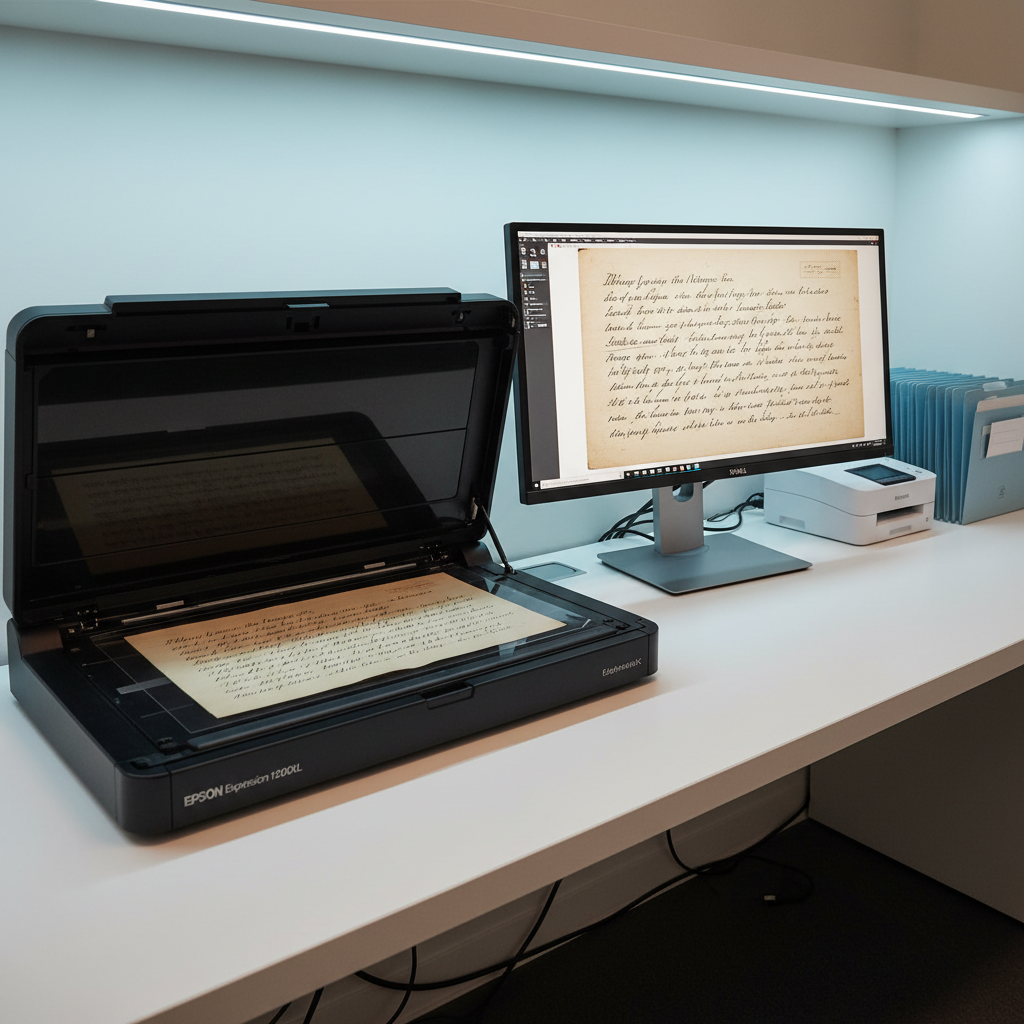
A meticulously organized digital scanning station for historical letters, with a flatbed scanner open to reveal a neatly positioned, handwritten 1900s letter beneath a protective transparent sheet. A high-resolution monitor beside it displays the scanned image, showing crisp black ink against slightly yellowed paper. Nearby, a stack of archival folders and a small label printer indicate careful cataloging. The desk is minimalist, matte white, with subtle cable management and no clutter. Cool, balanced LED lighting creates an even, shadow-free environment, reflecting gently on the scanner glass without glare. The composition uses the rule of thirds, placing the scanner and monitor as visual anchors. The mood is modern, precise, and methodical, emphasizing the professional digitization of historical correspondence in a clean, photographic style.
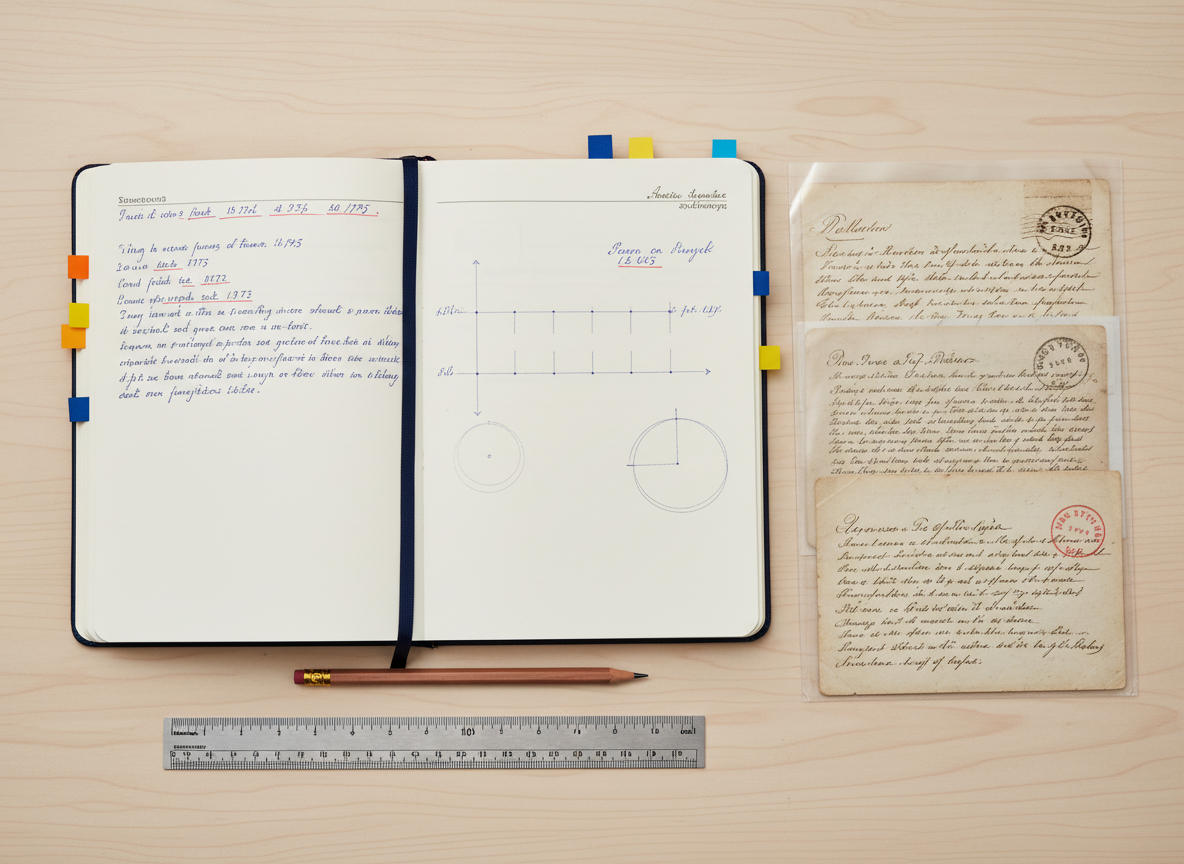
An overhead photograph of a meticulously annotated research notebook open beside several historical American letters slipped into clear archival sleeves. The notebook’s pages feature neat, handwritten notes, underlined dates, and color-coded sticky flags, while the sleeved letters reveal old postmarks and distinctive handwriting styles. A finely sharpened graphite pencil and a stainless-steel ruler rest across the notebook margin, emphasizing precision. Neutral, indirect daylight from above creates minimal shadows and a soft, even tone. The background surface is a smooth, pale birch wood that enhances the clean, professional atmosphere. The composition follows the rule of thirds, drawing the viewer’s eye from the notebook to the letters. The mood is studious and methodical, in a crisp photographic style suited to educational, archival research contexts.

Teaching

Explore ready-made document sets, primary-source packets, and discussion prompts built around letters from American history, ideal for classrooms, reading groups, or homeschoolers seeking engaging, document-based activities rooted in authentic private collections.

Perspectives

Browse essays modeling letter-based lessons, assessments, and reflective teaching.
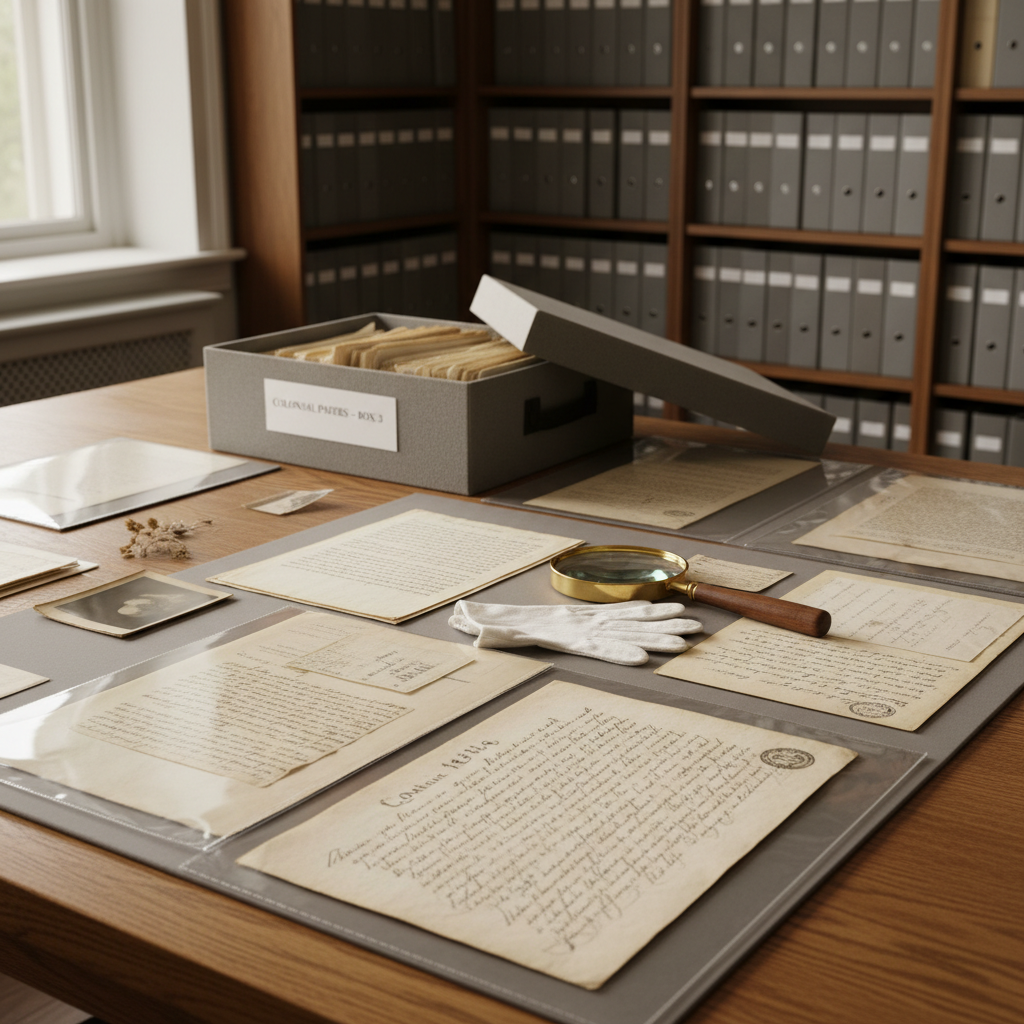
An archival workspace scene featuring a large oak table neatly arranged with historical American correspondence and ephemera. Acid-free document sleeves, cotton gloves, and a metal magnifying glass frame several letters dated in flowing ink. A labeled gray archival storage box sits at the back, its lid resting upright. A subtle, muted color palette of warm browns, soft creams, and neutral grays dominates. Overhead daylight from an unseen window creates a balanced, even illumination with soft, natural shadows, giving the room a quiet, focused atmosphere. Captured at an eye-level angle with a slight perspective toward the back of the table, photographic realism, sharp focus on the foreground documents, and a gentle falloff into a lightly blurred background of bookshelves filled with uniform archival binders.

Classroom Planning Resources

Download sample syllabus modules, source-analysis worksheets, and learning-objective guides that help you weave historical letters into surveys, seminars, or themed units while keeping skills, assessment, and accessibility at the center of your course design.